The 60s Official Site
"Where Music is Our Middle Name"
Quick Links
Soundtrack of the 60s with Neal Stevens
Todays Trivia Question. Your Daily Oldies Fix Top Ten Countdown Solid Gold Memories Jukebox Music
Vibration of a Nation Remember When Television of the 50s and 60s Do You Remember These 60s Slang
Things You Just Don't Hear Anymore 60s TV Commercials Chickenman Episodes Woodstock This Weeks Number One Hits
The Early Years of Rock and Roll Vietnam War Myths
All the content menu is listed on the left menu border bar
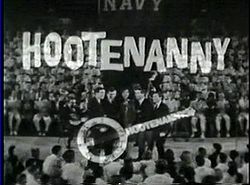
Hootenanny was a musical variety television show broadcast in the United States on ABC from April 1963 to September 1964. The program was hosted by Jack Linkletter. It primarily featured pop-oriented folk music acts, including The Journeymen, The Limeliters, the Chad Mitchell Trio, The New Christy Minstrels, The Brothers Four, Ian & Sylvia, The Big 3, Hoyt Axton, Judy Collins, Johnny Cash, The Carter Family, Flatt & Scruggs and the Foggy Mountain Boys, The Tarriers, Bud & Travis, and the Smothers Brothers. Although both popular and influential, the program is primarily remembered today for the controversy created when the producers blacklisted certain folk music acts, which then led to a boycott by others. Hootenanny was created in 1962 by Dan Melnick, Vice President of ABC-TV, and the Ashley-Steiner Talent Agency. The pilot was conceived as a half-hour special. The agency and network hired producer-director Gil Cates to oversee the initial production. It was Cates’ idea to tape the program at a college campus, and to liberally include the student audience on camera, singing and clapping along with the music. Cates staged the show as theater in the round, with the students seated on the floor or in bleachers, surrounding the performers. With Cates at the helm, the pilot was video taped in the fall of 1962 at Syracuse University in New York. Fred Weintraub, owner of The Bitter End, a folk music club in New York’s Greenwich Village, served as talent coordinator (and would continue to do so throughout the series’ run), ensuring that performers would not be limited to clients of the Ashley-Steiner agency. New York radio personality Jean Shepherd was the original emcee, and four folk acts appeared in the pilot: The Limeliters, Mike Settle, Jo Mapes and Clara Ward’s Gospel Singers. Rather than showcase acts once per show, each performer/group would do a song, then yield the stage to another and return later in the program. Occasionally two otherwise unrelated acts would team up for a duet. The final result was so well-received by network executives that the idea of airing the pilot as a stand-alone special was jettisoned, and production on the series began. Producer Richard Lewine was put in charge and Garth Dietrick assumed the Director’s chair. The first thing Lewine did was to replace Shepherd with Jack Linkletter. (When the original pilot aired in June 1963, Shepherd's scenes had been removed and Linkletter was spliced in. As Shepherd had done, Linkletter would discreetly provide information about the performer(s) and/or the song(s) they would sing as each act took the stage. Linkletter described his role as “an interpreter. The people at home hear what I have to say, but not the ones at the performance. (The feeling is) that the Hootenanny would be going on whether we were there or not.” On February 26, 1963, their first two Hootenanny programs were taped at George Washington University in the District of Columbia. Between February 26 and April 30, 12 Hootenanny shows were taped
at six colleges. The production team would arrive at a campus on Monday to begin rehearsal and camera blocking.
Taping of both half-hour programs would take place on Tuesday (later, when Hootenanny expanded to an hour, one
program each would be taped on Tuesday and Wednesday). Students were permitted to attend the rehearsals, many of
them volunteering to be runners for the various acts and production staff. The Nielsen ratings justified ABC’s faith in the concept. The first program garnered a 26% share of the viewing audience; this increased to 32% for the second show. By the end of April, ABC announced that Hootenanny would return in the fall as a one-hour show, provided the ratings held up. Which they did - Hootenanny soon became the network’s second-most popular show, after Ben Casey, with a peak audience of 11 million viewers per week. By the time Hootenanny concluded its first 13 weeks, a craze had been born. Afront-page Variety story noted that “the big demand for the folk performers in virtually all areas of show biz (records, concerts, college dates, TV, pix) is stimulating a new folk form that can appeal to a mass audience. Among writers now contributing to the new-styled folk song are Bob Dylan, Mike Settle, Tom Paxton, Shel Silverstein, Bob Gibson, Malvina Reynolds, Oscar Brand, Pete Seeger, Woody Guthrie.” MGM’s Sam Katzman produced Hootenanny Hoot, a motion picture featuring The Brothers Four, Johnny Cash, Judy Henske, Joe and Eddie, Cathie Taylor, The Gateway Trio and Sheb Wooley – all of whom did or would appear on Hootenanny. Record labels from the independent Folkways and Elektra to the mainstream Columbia and RCA-Victor released folk music compilation albums with “Hootenanny” in the title. Even before it reached the airwaves, Hootenanny created controversy in the folk music world. In mid-March, word circulated that the producers would not invite folk singer Pete Seeger, nor Seeger’s former group, The Weavers, to appear on the show. Both Seeger and the Weavers were alleged to have overly left-wing views; in Seeger’s case, he had been convicted of contempt of Congress for refusing to discuss his political affiliations with HUAC in 1955 – although the conviction had been overturned on appeal in May 1962. Variety broke the story in its March 20, 1963 issue, reporting that folksinger Joan Baez had refused to appear on the show because of the blacklisting. That same week, several folk artists gathered at The Village Gate in New York City to discuss forming an organized boycott, but opted instead to send telegrams of concern to ABC executives, producer Lewine and the Federal Communications Commission (FCC). Although Seeger and the Weavers were also banned from NBC and CBS variety shows, the Hootenanny issue rankled because Seeger and his long-time associate Woody Guthrie were the first to popularize the term ‘hootenanny’ as a gathering of folk musicians. To his credit, Seeger encouraged his fellow artists not to boycott
but to accept Hootenanny invitations, so as to promote the popularity of the folk genre. Nevertheless, by the
end of March three other folk acts had joined Joan Baez in boycotting the show: Tom Paxton, Barbara Dane and The
Greenbriar Boys, a bluegrass trio. Some weeks later, Guthrie disciple Ramblin' Jack Elliot announced he, too,
was boycotting Hootenanny. With the expansion of Hootenanny to one hour weekly, effective with the broadcast of September 21, 1963, the producers made overtures to Pete Seeger. However, there was a caveat, spelled out in a letter from network executives: “ABC will consider Mr. Seeger’s use on the program only if he furnishes a sworn affidavit as to his past and present affiliations, if any, with the Communist Party, and/or with the Communist front organizations. Upon so doing, the company will undertake to consider his statement in relation to all the objective data available to it, and will advise you promptly if it will approve the employment of Mr. Seeger.” Seeger, naturally, refused to provide anything that smacked of a loyalty oath, and his manager, Harold Leventhal, made the story public - which only encouraged others to refuse appearances. ABC scheduled Hootenanny for a third season, but a major shift in popular music brought about a last-minute reversal. The 1964 British Invasion eclipsed the folk music craze among younger viewers, resulting in a decline in Hootenanny’s viewership to about seven million by the end of April 1964, prior to the start of reruns. Not only viewers, but musicians, were affected by the Invasion; performers such as Gene Clark (The New Christy Minstrels), John Phillips (The Journeymen), Cass Elliot (The Big 3) and John Sebastian (The Even Dozen Jug Band) - all of whom had appeared on Hootenanny's second season - abandoned folk music to form very successful pop-rock groups including The Byrds (Clark), The Mamas & the Papas (Phillips and Elliott) and The Lovin' Spoonful (Sebastian). There were other factors that contributed to Hootenanny's demise, not least of which was repetition of both songs and artists. Eventually, it seemed that you were likely to see The Serendipity Singers, or The New Christy Minstrels, or The Brothers Four every time you tuned in; occasionally, you'd see two of the three. Faced with both a dwindling talent pool and growing viewer indifference, on June 8 ABC announced that Hootenanny would be cancelled. Another series with youth appeal, The Outer Limits, took over the timeslot; to replace that program on Wednesday evenings, ABC hastily scheduled a new music series: Shindig!. |
|

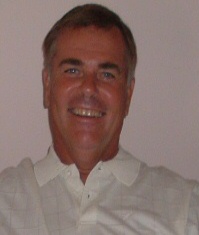
Carl Hoffman
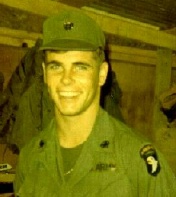
Carl Hoffman - Vietnam 1968